The Shorefast Impact Intelligence Engine
An internal reporting engine I built with Claude Code that unifies digital data from across Shorefast's ecosystem into a single source for impact metrics.
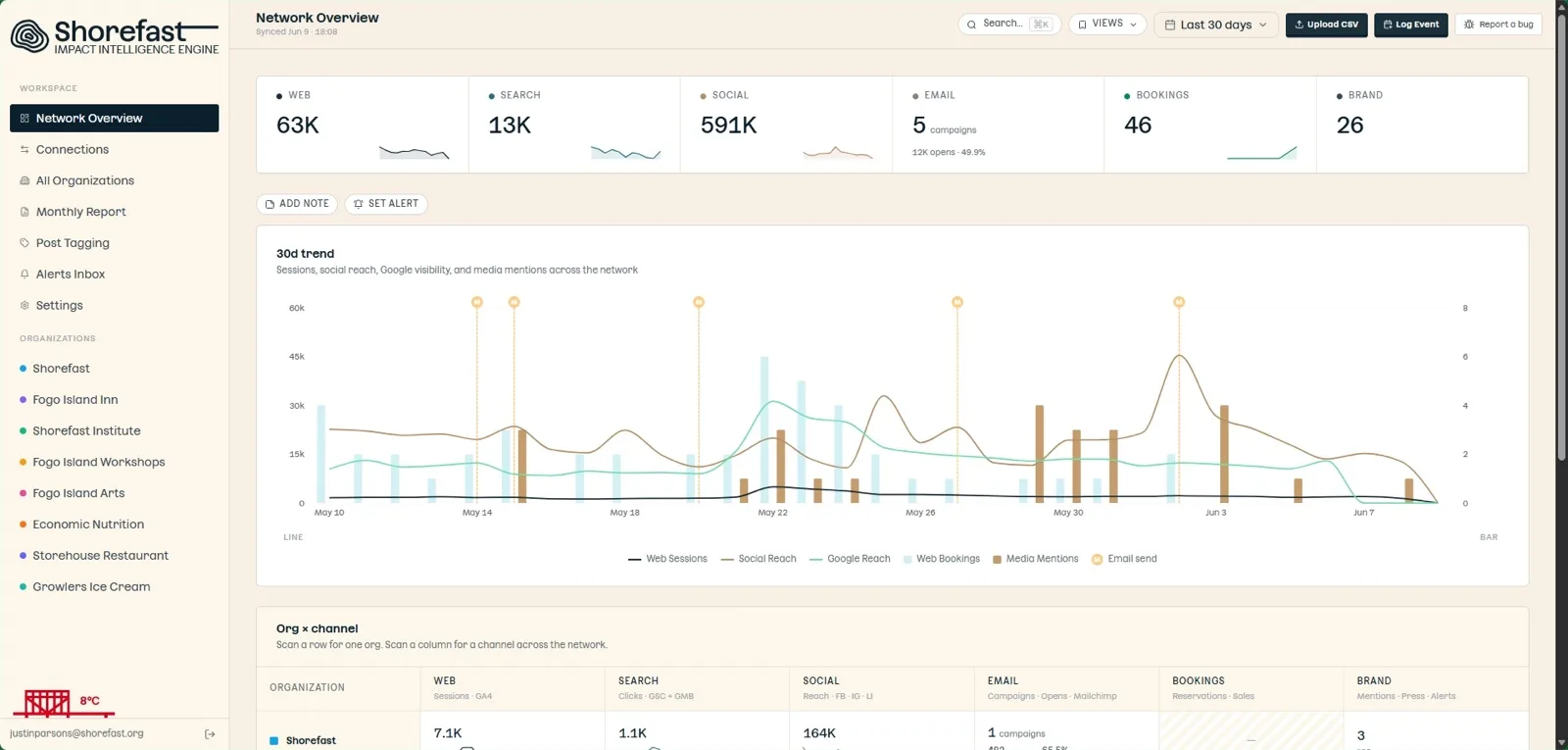
Shorefast runs a family of brands and initiatives, each generating its own stream of digital data. The Impact Intelligence Engine pulls all of it into one place, so Shorefast can see its collective impact instead of working from a dozen disconnected dashboards.
It is an internal reporting tool I built with Claude Code for Shorefast. It brings together data from across the organization's ecosystem, from social and email to web analytics, search, press mentions, and offline activity, into a single source for metric reporting.
The Problem
The data lived everywhere. Meta for social, Mailchimp for email, Google Analytics and Search Console for the websites, Google Alerts for press, RSS feeds for new content, and spreadsheets for sales and events. Pulling a single picture of impact meant logging into a dozen tools and stitching numbers together by hand, every time.
What It Does
The Engine connects to each of those sources and unifies them into one reporting layer. Instead of chasing numbers across platforms, the team gets a consolidated view of how the organization's work is performing across the whole ecosystem, ready for reporting.
It also makes room for the data that does not come from an API. Sales figures and external events are brought in through custom CSV entry, so the offline side of the story sits right alongside the digital metrics.
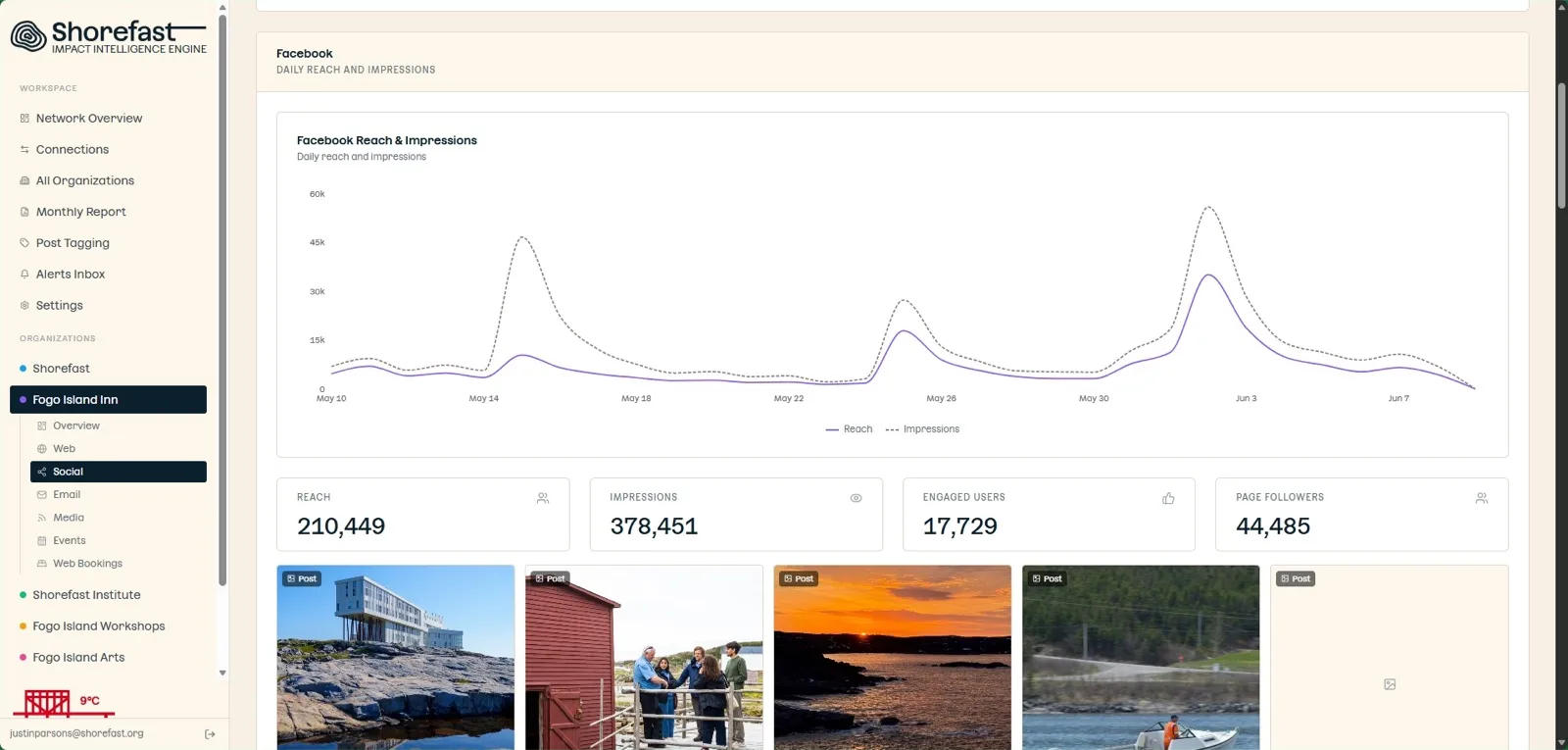
Each channel can also be explored on its own, like this view of Facebook reach and impressions for Fogo Island Inn.
The Integrations
Meta API for social performance.
Mailchimp API for email and audience metrics.
Google Analytics for website traffic and behaviour.
Google Search Console for search visibility.
Google Alerts for press and brand mentions.
WordPress RSS feeds for newly published content.
Custom CSV entry for sales and external events.
Built With Claude Code
Like Flight Deck, the Engine was built completely with Claude Code. Wiring up this many integrations would normally be a long slog. AI-assisted development made it possible to connect each source, normalize the data, and reach a useful reporting layer far faster than I could have on my own.